10 Solar Panel System Buying Tips for Global Buyers
Buying a Solar Panel System is a long-term equipment decision, not just a search for the lowest price. Global demand is rising quickly. The IEA PVPS Trends 2024 report estimated that cumulative installed solar photovoltaic capacity passed 1.6 terawatts worldwide in 2023. IRENA’s Renewable Power Generation Costs in 2023 reported that the global weighted-average electricity cost for newly commissioned utility-scale solar PV fell 12% from 2022, to about US$0.044 per kilowatt-hour. These figures show market momentum, not guaranteed savings for every buyer. Site conditions matter.
For global buyers, a sound comparison starts with the project location, sunlight, grid conditions, shipping terms, warranties, and service access. A lower-priced module may not be the best value if replacement parts take months to arrive. Request itemized quotes, relevant test documentation, warranty terms, inverter compatibility, and yield estimates based on your location. Ask who handles commissioning and after-sales support. Keep records. These checks help, but they cannot remove every uncertainty. Forecasts depend on weather, installation quality, and future energy prices. Treat projected returns as estimates, not promises. This guide offers ten buying tips to help buyers compare proposals with clearer questions and fewer surprises. Some details still need local verification.

Assess Energy Needs, Site Conditions, and Local Climate
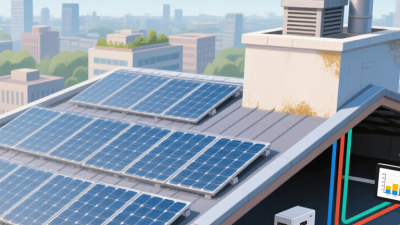
Assess the site before comparing panel prices. Review twelve months of electricity bills and note seasonal peaks, such as summer cooling or winter heating. Then check roof orientation, usable area, shade, and structural condition. A chimney shadow across one panel can reduce output more than a broad, unshaded roof suggests. Global Solar Atlas maps long-term solar resources, but local trees and nearby buildings still need a site inspection.
Climate changes expected production. NREL’s PVWatts model uses a default 14% system-loss assumption; it is an estimate, not a promise for any home. Dust, snow, shade, wiring, and equipment choices can shift real-world results. High module temperatures can also lower power output, so hot, sunny locations may produce less than sunlight alone implies. A neat estimate can miss local details. Check the weather data period and ask installers to explain their shading and temperature assumptions.
Tip: Photograph roof shade in the morning and afternoon, and record monthly utility use. Compare estimates for your actual roof direction and local weather, not just an ideal south-facing example. Ask how snow, dust, coastal salt, or long heat waves affect maintenance and production. Estimates need questioning. A site visit can catch what a map cannot.
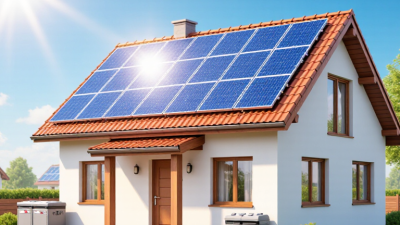
10 Solar Panel System Buying Tips for Global Buyers — Assess Energy Needs, Site Conditions, and Local Climate
How Local Sunlight Affects Estimated Solar System Size
For an example daily energy use of 10 kWh and an assumed system performance ratio of 0.80, estimated PV capacity is calculated as: daily energy use ÷ (peak sun hours × performance ratio). The sunlight values shown are scenarios, not location-specific measurements. Check local solar-resource data, seasonal variation, shading, and roof orientation before choosing a system.
Compare Panel Types, Efficiency, and System Capacity
Panel type affects how much power fits on a roof, but efficiency alone does not determine value. Monocrystalline panels usually provide more output per square metre, which helps when roof space is tight. Polycrystalline panels may suit larger, less constrained roofs, though availability and performance vary by market. Thin-film panels can be lighter and flexible, but often need more area for similar capacity. Check the roof.
Compare efficiency figures under the same test conditions, then consider real site conditions. Dust, high temperatures, shading, and roof direction can reduce output. A panel rated at 22% efficiency will not deliver that figure all day. Ask suppliers for expected annual energy production, assumptions, and degradation data. I would be cautious with a neat estimate; actual weather is rarely neat.
Size the system using household or facility electricity bills, not roof area alone. For example, a buyer using 20 kilowatt-hours daily should compare local sunlight hours and system losses before choosing capacity. A rough estimate helps, but it is not a final design. Include seasonal demand, future equipment, and any battery plans. A small system may leave important loads uncovered; an oversized one can produce power you cannot use. Request a site-specific assessment and check that panel dimensions, inverter capacity, and mounting layout work together.
Select Compatible Inverters, Batteries, and Grid Options
A solar system works best when its inverter, battery, and grid connection are planned as one setup. Check the inverter’s DC voltage range and maximum input current against the panels’ expected output. A mismatch can reduce production or prevent safe operation. Small details matter. For batteries, confirm the inverter supports the battery’s voltage and battery-management communication. Then compare usable capacity and discharge power with your evening loads, such as a refrigerator, lights, and a water pump. Do not size from a monthly bill alone; it can hide short, high-power surges.
Tips: Ask for the inverter’s compatibility list and a wiring diagram before ordering. Confirm whether the system is grid-tied, hybrid, or off-grid. If backup matters, identify which circuits must stay on during an outage. A small critical-load panel may be more practical than backing up the whole house. Check local utility interconnection requirements with a qualified installer, since export limits and approval steps vary by location.
Compare battery capacity in usable kilowatt-hours, not just its headline rating. Also check its continuous output and expected cycle life under the temperatures where it will operate. A battery in a hot garage may behave differently from one in a cool utility room. For grid-connected systems, ask how the inverter handles outages; many grid-tied units shut down unless designed for backup. I would recheck the load estimates before placing an order. A spreadsheet can still miss a pump starting at dawn.
| Tip | What to Check | Practical Guidance | Why It Matters |
|---|---|---|---|
| 1. Match inverter input limits to the panels | Maximum PV voltage, operating voltage range, MPPT range, and input current | Compare the panel string’s cold-weather open-circuit voltage and operating current with the inverter specifications. Keep voltage and current within the inverter’s stated limits. | Incompatible string design can prevent reliable operation or exceed equipment limits. |
| 2. Check local grid voltage and frequency | Utility voltage, phase type, and frequency at the installation site | Confirm that the inverter supports the local supply, such as single-phase or three-phase service and the applicable 50 Hz or 60 Hz frequency. | Grid-connected equipment must be configured for the local electrical system. |
| 3. Verify grid-code and interconnection requirements | Local utility rules, grid protection functions, and required approvals | Ask the utility or installer which inverter certifications and settings are accepted before ordering. Requirements differ by country and sometimes by utility. | A technically compatible inverter may still be ineligible for grid connection without local approval. |
| 4. Choose the right system configuration | Grid-connected, hybrid, or off-grid operation | Choose grid-connected equipment when the utility is available and storage is not required; select a compatible hybrid or off-grid design when backup or independent operation is needed. | Not every grid-tied inverter can operate during an outage or connect to batteries. |
| 5. Confirm battery and inverter compatibility | Battery chemistry, voltage range, charge limits, and communication protocol | Check both manufacturers’ compatibility information, including battery-management-system communication and permitted charging and discharging currents. | Voltage alone does not establish compatibility; control and protection requirements must also match. |
| 6. Size storage for the loads you need to support | Essential-load energy use, backup duration, and battery usable capacity | Estimate the energy used by priority loads during an outage. Compare that estimate with the battery’s usable capacity, accounting for conversion losses and the battery’s permitted depth of discharge. | Battery size should reflect actual backup needs rather than total household consumption by default. |
| 7. Size the solar array using local conditions | Daily energy use, local peak-sun-hours, shading, and system losses | Use local solar-resource data and a site assessment. As a rough planning method, divide daily energy demand by peak-sun-hours and an estimated system performance factor; have the final design professionally verified. | Solar yield varies with location, season, orientation, shading, temperature, and system losses. |
| 8. Check backup power and surge capacity | Continuous output, short-term surge rating, and supported backup circuits | Compare the inverter’s ratings with the starting demands of motors, pumps, refrigeration, and other high-startup loads. Confirm which circuits can run in backup mode. | Some appliances briefly require more power to start than they use during normal operation. |
| 9. Understand export limits and metering | Permission to export, export caps, meter requirements, and compensation rules | Confirm whether the utility allows exports and whether a zero-export setting, export limiter, or specific meter arrangement is required. | Grid export policies and payment arrangements vary by location and can affect system design and economics. |
| 10. Review environmental conditions and documentation | Temperature range, enclosure protection, corrosion exposure, certifications, and warranty terms | Check that equipment suits the installation environment, including heat, humidity, dust, or coastal conditions. Review applicable local standards, installation instructions, and warranty coverage. | Environmental suitability and locally accepted documentation help support safe installation and long-term service. |
Verify Certifications, Warranties, and Supplier Reliability
A solar panel certificate should match the exact model being quoted, not merely a similar product from the same factory. Check independent test documentation for IEC 61215 design qualification and IEC 61730 safety qualification, including model numbers and issuing laboratory. Ask for serial-number traceability and production quality-control records. A certificate is useful evidence, not a guarantee that every panel will perform perfectly.
Read product and performance warranties separately. Product coverage concerns defects; performance coverage sets an output threshold over time, often with exclusions and claim procedures. NREL’s review of field studies found a median photovoltaic module degradation rate near 0.5% per year (Jordan and Kurtz, “Photovoltaic Degradation Rates—An Analytical Review,” 2013). That figure is a research benchmark, not a forecast for your roof. Check what measurements prove a claim, who pays shipping, and whether the warranty provider is likely to remain reachable. Small details matter.
Supplier checks need more than polished brochures. Request recent project references, audited financial information where available, a local service contact, and written response times for faults. Confirm that replacement modules will be compatible if the original model is discontinued. A certificate is not a promise of painless service. Even careful buyers cannot remove every risk; unclear paperwork should prompt more questions, not an optimistic guess.
Compare Installation Costs, Maintenance, and Long-Term Value
Solar panel prices are hard to compare unless each quote covers the same equipment, roof work, and electrical upgrades. Ask installers to separate panel, inverter, mounting, labor, and permit costs. A low headline price may exclude wiring changes or roof repairs. Check whether the estimate includes safe access equipment and removal of old materials, if needed. Local sunlight, utility rates, and export payments also affect payback, so compare estimates using your own recent electricity bills.
Tip: Request two or three itemized quotes. Ask what could change the price after a site inspection, and get warranty terms in writing.
Maintenance is usually modest, but it is not zero. Dust, leaves, or bird droppings can reduce output, especially on a low-pitched roof. Ask who monitors system performance and what a service visit costs. Inverters may need replacement before the panels do; include that possibility in long-term estimates. Compare projected savings over the same period, and check the assumptions behind each forecast. Electricity prices may rise, but they may not. Even careful estimates can miss a roof issue or future repair, so leave room in your budget rather than treating the payback date as certain.
Related Posts
-
10 Tips for Choosing a Commercial Solar Panel?
-
7 Best Commercial Solar Systems for Businesses in 2026
-
How to Choose a Solar Panel System for Your House in 2026?
-
How to Choose the Right Solar Panel System?
-
Unlocking Savings: How Solar Panels for Business Can Slash Energy Costs by 70% in 5 Years
-
Why Choose Solar Panels For Home Use?