7 Best Commercial Solar Systems for Businesses in 2026
For many businesses, electricity is no longer a background expense. It affects operating costs, resilience, and long-term planning. A Commercial Solar System can put unused roof space, parking canopies, or open land to work. Yet the system with the most panels is not automatically the best choice. Fit matters more.
This 2026 guide introduces seven commercial solar systems worth comparing, with attention to practical details: power capacity, inverter design, monitoring tools, warranty coverage, and compatibility with battery storage. A warehouse running machinery through the day has different needs from a hotel with evening demand. Roof age and available space matter, too. So does the local installation team.
Look beyond headline savings. Ask how projected output was calculated, what equipment is included, and who handles maintenance if performance drops. Compare proposals using the same assumptions. Small differences can change the picture.
There is no universal winner. Some systems may suit a large facility but feel excessive for a smaller operation. And product specifications do not guarantee real-world results; shade, weather, utility rules, and installation quality all play a part. A shortlist is a starting point, not a substitute for a site assessment. The strongest choice is the one that matches your building, energy use, and budget—and still makes sense when the forecast proves a little optimistic.
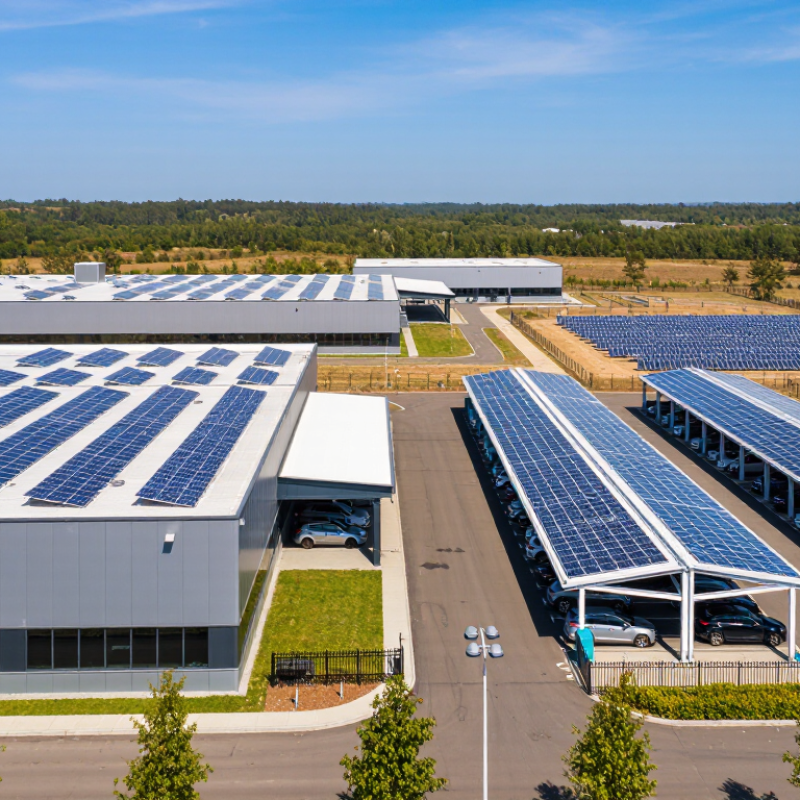
Commercial Solar Market Context: U.S. Solar Added 50 GW in 2024
Industry estimates put new U.S. solar capacity at roughly 50 gigawatts in 2024. That figure describes installed capacity, not electricity produced throughout the year. It signals rapid expansion, but it does not mean every business can install solar easily. A warehouse with a broad, unshaded roof has different needs from a shop with limited space and evening-heavy demand. System size, utility rates, roof condition, and local grid access all matter. Growth is real. So are the constraints.
Tips: Review at least twelve months of utility bills and interval data before comparing proposals. Ask for projected annual output, system degradation assumptions, and estimated savings under your actual rate plan. Check roof age and structural capacity; replacing a roof after installation can complicate the project. Battery storage may help some businesses manage peak demand, but it adds cost and needs careful analysis.
A useful comparison looks beyond panel count or headline savings. Request clear estimates for design, installation, maintenance, and expected production. Confirm how shading, seasonal weather, and downtime affect the forecast. Estimates are not guarantees, and some proposals may assume ideal conditions. That deserves scrutiny. Businesses should also ask about interconnection timelines, since grid approvals can affect when a system begins operating. The 2024 market figure provides context, not a shortcut to choosing the right commercial solar system.
7 Best Commercial Solar Systems for Businesses in 2026
U.S. Solar Market Context: Annual Solar Capacity Additions
The U.S. added approximately 50 GWdc of solar capacity in 2024, a record annual total. This rapid market growth provides context for businesses evaluating commercial solar systems; the best fit depends on site conditions, energy use, financing, and storage needs.
Seven Business PV Setups: Rooftop, Ground-Mount, Carport, Canopy, and More
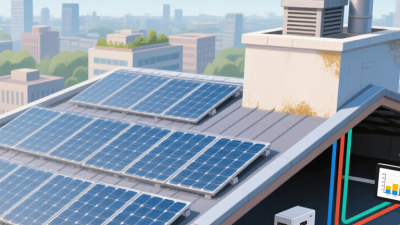
Commercial solar works best when the array matches a site's roof, land, parking, and daytime demand. A rooftop system uses existing space, but roof age, shading, and structural capacity need careful review. Repairs under panels can become awkward. Access matters.
Ground-mounted arrays offer easier access and flexible orientation, though they consume open land and may require longer cable runs. Carport systems turn parking rows into power-producing shade. They can protect vehicles, but foundations and traffic flow deserve early attention.
A separate canopy setup can cover loading bays, outdoor work areas, or pedestrian routes. Its spans and clearance should suit actual vehicles and equipment, not just renderings.
Building-integrated façade panels use vertical surfaces where roofs are crowded. Output may vary with orientation and nearby shadows.
Floating solar places modules on suitable reservoirs or industrial ponds, if water access and anchoring conditions permit. It can preserve land, but maintenance logistics may be less familiar.
A seventh option combines PV with battery storage, often beside rooftop or carport arrays. Storage can shift some solar electricity into evening operations, though sizing depends on load patterns and tariffs.
No layout wins everywhere. Compare usable area, structural checks, interconnection limits, cleaning access, and expansion plans before choosing. A site visit and interval-meter data reveal details that a satellite image misses. Even then, forecasts remain estimates; leave room to revise assumptions.
Compare System Output Using Commercial Module Efficiencies Above 22%
For a business roof, commercial modules above 22% efficiency can deliver more rated capacity within limited space. Efficiency measures how much sunlight a module converts into electricity under standard test conditions. It is not a promise of year-round energy production. More watts per square metre.
Compare systems using the same usable roof area, orientation, and shading assumptions. For example, across 1,000 square metres of active module surface, moving from 22.2% to 23.3% efficiency represents roughly 11 kW more DC capacity at standard test irradiance. Actual roof layouts need gaps for access, setbacks, and equipment, so the installed difference may be smaller. The arithmetic is useful, but incomplete.
Higher efficiency may help sites with crowded roofs, yet annual output also depends on temperature, inverter sizing, wiring, and local sunlight. Ask for hourly or monthly production estimates, not just a panel’s peak rating. Check the assumptions behind them. A careful comparison should show module area, DC capacity, expected losses, and estimated yearly kilowatt-hours for each system. Those estimates still carry uncertainty; even a tidy spreadsheet can miss a roof obstruction or changing shade.
Estimate 25-Year Energy Yield at 0.5% Annual PV Degradation
A commercial solar system’s 25-year energy yield is not its first-year output multiplied by 25. With annual PV degradation set at 0.5%, each year produces 99.5% of the previous year’s modeled output. The arithmetic matters. A system generating 100,000 kWh in year one would produce roughly 2.36 million kWh over 25 years, assuming degradation is the only change.
That estimate is a starting point, not a production guarantee. A dependable comparison also accounts for local sunlight, roof direction, shading, inverter downtime, and routine maintenance. For example, a nearby rooftop obstruction may cast a narrow shadow across several panels during winter afternoons. Small details can shift the forecast. Use the same assumptions when comparing system sizes, or the numbers may look more persuasive than they are.
A useful model shows yearly production, not just one lifetime total. Check whether the stated 0.5% applies from year two onward, and whether the first-year estimate already includes system losses. Weather varies, and equipment does not always behave exactly as a spreadsheet predicts. That uncertainty deserves a clear note. Even a careful estimate can miss the mark. If actual utility bills differ, review operating data and assumptions before treating the forecast as a failure.
Choose by Business Load, Storage Needs, Tariffs, and Grid Limits
A commercial solar system should start with the building’s load profile, not roof area alone. Review interval-meter data across seasons, including early-morning refrigeration, midday production, and evening equipment use. A bakery running ovens before sunrise has different needs from an office that empties after five. Compare the system’s expected output with actual hourly demand. Close, but not exact.
Storage makes sense when batteries can serve a clear purpose, such as covering evening loads or reducing brief demand peaks. Check how often those peaks occur and how long they last. A battery sized for a single unusual afternoon may sit underused for much of the year. Temperature, usable capacity, and backup requirements also affect its practical value.
Tariffs can change the calculation. Demand charges, time-based rates, and export credits vary by utility, so use current bills and confirm the applicable rate schedule. Grid limits matter too: a site may face restrictions on export or require a smaller connection capacity. Ask a qualified solar professional to assess interconnection requirements, roof condition, and electrical equipment before comparing proposals. One uncertainty remains: future rates and operating hours may shift, so test several realistic scenarios rather than trusting one forecast.
7 Best Commercial Solar Systems for Businesses in 2026 — Choose by Business Load, Storage Needs, Tariffs, and Grid Limits
| System Type | Typical Business Load | Indicative Solar Array Size | Storage Configuration | Best Tariff Fit | Grid and Export Considerations | Best Suited For |
|---|---|---|---|---|---|---|
| 1. Grid-Tied Rooftop Solar | Small offices and shops with steady daytime use, typically tens of kilowatts of peak demand. | About 20–100 kW DC, subject to usable roof area and electrical-service capacity. | Usually none initially; storage can be added if outage protection or tariff economics justify it. | Most suitable when daytime electricity prices are meaningful and exported energy is credited at a lower rate than self-consumed energy. | Confirm interconnection capacity, protection requirements, and permitted export level before finalizing array size. | Businesses seeking a comparatively simple way to offset daytime grid purchases. |
| 2. Daytime-Load Rooftop Solar | Warehouses, retail sites, and light-industrial facilities with substantial daytime operating hours. | About 100–500 kW DC, sized against interval load data and available roof or carport area. | Often none; adding a battery is most useful when there is a specific demand-charge, time-of-use, or resilience case. | Works well where on-site use avoids higher retail energy prices and daytime consumption aligns with solar production. | Large arrays may require a utility impact study, export controls, or a staged interconnection approval. | Sites that can use much of their solar output while it is being generated. |
| 3. Solar Plus Peak-Shaving Battery | Facilities with short, high-power demand peaks, such as manufacturing sites or large commercial buildings. | About 100 kW to 1 MW DC, depending on load profile and available site area. | Typically tens to hundreds of kilowatts of discharge power and roughly 1–4 hours of usable energy; final sizing depends on peak duration. | Potentially valuable where utility bills include demand charges or time-varying energy prices. Confirm tariff rules and billing intervals. | Battery controls must respect interconnection limits, operating rules, and any restrictions on grid charging or export. | Businesses whose brief demand spikes contribute materially to their electricity bill. |
| 4. Solar Plus Time-of-Use Shifting | Sites with daytime solar production and significant evening or late-afternoon electricity use. | About 50–500 kW DC, with the array sized to the site’s load and export economics. | Often 2–4 hours of rated discharge duration as a starting point; usable capacity and power need to match the target time window. | Designed for tariffs with higher-priced periods later in the day, provided the price spread exceeds battery losses and costs. | Check the applicable time-of-use schedule, seasonal changes, battery dispatch rules, and export compensation. | Businesses able to charge storage from solar and discharge during higher-cost periods. |
| 5. Export-Limited or Zero-Export Solar | Sites with modest daytime demand relative to the available roof area or solar production. | Array size is constrained by on-site use and the approved export limit; it may be smaller than the roof could physically support. | Optional. Storage can absorb some surplus energy, but its value depends on charging opportunities, load timing, and economics. | Most relevant where exported electricity receives little or no compensation, or where export is capped by the utility. | Requires suitable export-limiting controls and utility approval; verify how the system responds to changing site load. | Businesses facing strict export caps or poor compensation for excess generation. |
| 6. Solar Plus Resilience Battery | Businesses with critical loads such as refrigeration, communications, safety systems, or essential production equipment. | About 20 kW to 1 MW DC, depending on critical-load demand and the site’s available installation area. | Size to the required backed-up load and outage duration; battery power (kW) and stored energy (kWh) are separate design constraints. | Resilience is the primary objective; bill savings may be a secondary benefit and should be evaluated separately. | Backup operation generally requires appropriate isolation and transfer equipment. A standard grid-tied solar system may shut down during an outage. | Sites where maintaining selected operations during grid outages has measurable business value. |
| 7. Large-Scale Commercial or Industrial Solar | Campuses, distribution centers, and industrial facilities with large annual electricity use and substantial site or roof area. | About 500 kW DC to several MW DC, subject to structural, land-use, electrical, and interconnection limits. | Optional and project-specific; evaluate storage power, duration, cycling needs, and dispatch strategy against the tariff and operational goals. | Potentially suitable for high annual consumption, demand-charge management, or time-of-use optimization, depending on the utility tariff. | Expect detailed interconnection review; feeder capacity, protection studies, export limits, and upgrade costs can affect project feasibility. | Organizations able to coordinate solar design with facility operations, utility review, and long-term energy planning. |
Planning note: System sizes are broad, illustrative ranges rather than universal recommendations. Actual sizing and financial performance depend on interval-metered load, location and solar resource, roof or land conditions, utility tariff, interconnection approval, applicable codes, and project costs. Have a qualified designer assess the site before procurement.
Related Posts
-
10 Tips for Choosing a Commercial Solar Panel?
-
China Top 10 Commercial Solar System Manufacturers?
-
How to Choose the Perfect Solar Panel System for Your Home Needs
-
2026 Best Solar Panels For Home Which Type Is Best?
-
What is Solar Panels For Home: A Complete Guide to Home Solar Energy Solutions
-
Why Choose Solar Panels For Home Use?