
How to Choose a Solar Panel System for Your House in 2026?

Choosing a solar system for your home can feel like comparing panels, prices, and promises.

Yet panels are only one part of the decision. A suitable Solar Panel System For House must match your roof, electricity use, budget, and local weather. Roof direction matters. So does shade from a chimney at 3 p.m.

The market is expanding rapidly. The International Renewable Energy Agency’s Renewable Capacity Statistics 2025 reported about 452 gigawatts of new solar photovoltaic capacity worldwide in 2024. Solar represented most of the year’s renewable additions. This growth suggests stronger supply chains, but it does not make every household system a good investment.

A reliable choice begins with measured evidence. Review twelve months of utility bills, not one unusually expensive month. Use tools such as NREL’s PVWatts Calculator to estimate production from roof orientation, tilt, location, and system losses. Then compare panel efficiency, inverter reliability, battery needs, warranty terms, installation quality, and expected payback.

The details are practical. A 6-kilowatt system may fit one family but undersupply another with an electric vehicle. A battery can keep essential lights running, but it may not power every appliance overnight. Local installers should explain permits, interconnection rules, maintenance, and realistic output without hiding assumptions.

No estimate is perfect.

Even professional forecasts can miss future electricity prices, roof repairs, or changing household habits. I would treat advertised savings as a range, not a guarantee. This guide uses industry data and homeowner-focused checks to help you choose carefully, ask sharper questions, and avoid buying capacity your roof cannot sensibly support.
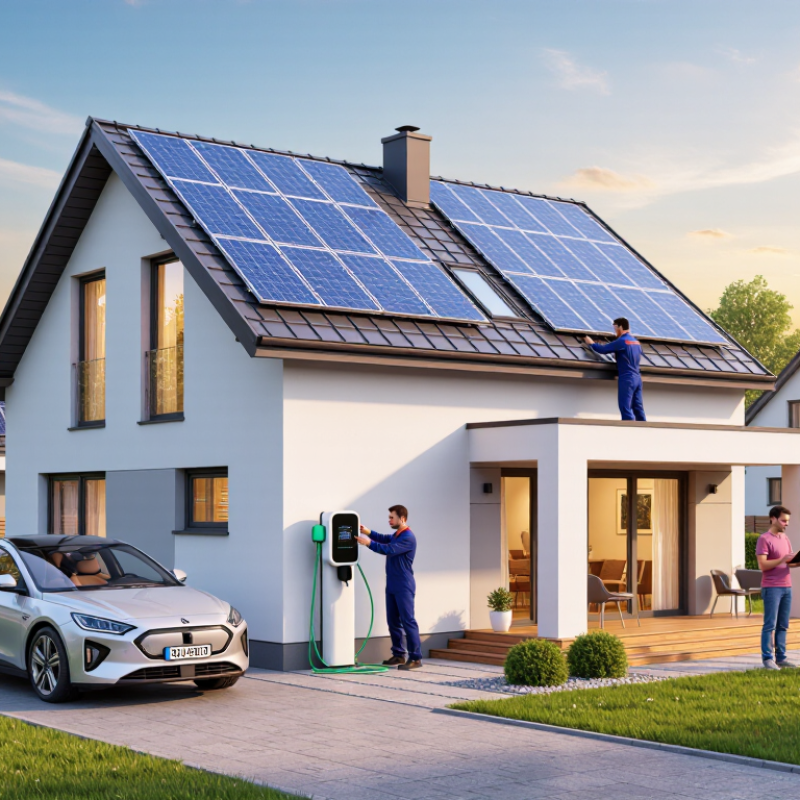
How to Choose a Solar Panel System for Your House in 2026?

Assess Your Home’s Energy Needs and Solar Goals

Begin with twelve months of electricity bills, not a roof-size guess. The U.S. Energy Information Administration reported average household electricity use of 10,715 kilowatt-hours in 2020. Your home may differ significantly. Record monthly consumption, peak summer usage, and planned changes, such as an electric vehicle or heat pump. A simple spreadsheet can reveal whether cooling drives your demand. It also exposes unusually high winter consumption. Do not rely on one bill.

Define the goal before comparing system sizes. Lower bills require different planning than backup power during outages. Emissions reduction may favor a larger system, even when payback takes longer. NREL’s PVWatts model applies a default 14% system-loss assumption, covering wiring, temperature, and equipment effects. Use that conservative starting point. Then compare its estimate with local shade, roof direction, snow, and utility rules. Real roofs are imperfect. Mine would be.

Ask an installer to show production by month, not only annual output. A system producing 10,000 kilowatt-hours yearly may still leave winter bills high. If resilience matters, identify essential circuits, battery duration, and nighttime loads. The International Energy Agency’s Electricity 2024 report expects electricity demand to keep rising through 2026, partly from cooling and electrification. That trend makes future consumption worth pricing now. Yet oversized systems can waste money when export credits are limited. Recheck your assumptions after one year of actual bills.

Evaluate Roof Conditions, Sunlight, and Available Installation Space

Before choosing a solar panel system in 2026, inspect your roof carefully. Check its age, surface condition, slope, and load-bearing strength. A roof with cracked tiles or soft decking may need repairs first. Professional installers can assess structural risks and identify shaded areas. I once saw a small chimney reduce useful sunlight more than the homeowner expected. Roof space can disappear quickly.

Sunlight matters as much as panel size. Observe shadows from trees, nearby buildings, vents, and dormers throughout the day. A roof may look bright at noon but remain shaded during important morning hours. Use a site assessment or solar analysis tool for more reliable estimates. Also measure usable installation space, not the total roof area. Walkways, setbacks, and maintenance access reduce the available surface. My first estimate was too optimistic, and that mistake was useful.

Tips: Photograph your roof at different times. Record shadows in winter, too. Ask for a written shading report and structural inspection. Leave clear access around vents and roof edges. Do not place panels where future repairs become difficult. Compare the proposed layout with your household’s electricity use, because maximum coverage is not always the most practical choice.

How to Choose a Solar Panel System for Your House in 2026? - Evaluate Roof Conditions, Sunlight, and Available Installation Space

Evaluation Factor Favorable Condition Caution Zone Potential Impact on System Choice Recommended Action
Roof Orientation South-facing roof in the Northern Hemisphere, or north-facing roof in the Southern Hemisphere East- or west-facing roof East and west orientations can still produce useful energy but may have lower or differently timed output than the preferred direction. Use the roof plane with the best annual solar exposure; compare production estimates for each available orientation.
Roof Pitch Approximately 15°–40° in many residential installations Very low-slope or steep roofs requiring special mounting methods The mounting structure may need additional tilt, ballast, attachment points, or specialized labor. Have the roof pitch and attachment method reviewed during the site assessment.
Unshaded Sunlight About 4–6 peak sun hours per day on an annual average Frequent shading from trees, chimneys, nearby buildings, or roof structures Shade can reduce output and may cause mismatch between panels on the same electrical circuit. Check seasonal shading, not only midday summer conditions; consider module-level power electronics where appropriate.
Usable Roof Area Approximately 10–12 m² of unobstructed area per 2 kW of panels, depending on panel size and layout Small, fragmented, or obstruction-heavy roof sections Limited space may require higher-efficiency panels or a smaller system. Measure clear roof sections and leave access paths, edge setbacks, vents, skylights, and fire-safety clearances.
Roof Condition Roof is structurally sound with many years of serviceable life remaining Leaks, damaged decking, corrosion, or a roof nearing replacement Installing panels before roof repairs can increase future removal and reinstallation costs. Repair or replace the roof first when necessary, and obtain a structural inspection for older buildings.
Roof Material Common asphalt shingles, standing-seam metal, or concrete tiles in good condition Fragile tile, slate, thatch, or unusual roofing assemblies Attachment techniques, labor requirements, and installation risk can vary significantly. Select a mounting approach designed for the specific roof material and local building requirements.
Household Electricity Use A system sized from at least 12 months of electricity bills or interval data Major upcoming loads such as an electric vehicle, heat pump, or electric water heater Future consumption can make an initially adequate system undersized. Include expected electrification loads and local limits on system size or grid export.
Panel Efficiency and Power Modern residential panels commonly offer about 19%–23% efficiency and roughly 350–500 W per panel Very limited roof area or a layout with many obstructions Higher efficiency can provide more capacity from the same roof area, although it may cost more. Compare total installed cost, available area, temperature behavior, and expected annual energy—not efficiency alone.
Inverter Configuration One simple roof plane with similar orientation and minimal shade Multiple orientations, partial shade, or several roof sections Different roof conditions may benefit from separate maximum-power-point tracking or module-level control. Ask for a design that models each roof plane separately rather than assuming identical conditions.
Battery Storage Need Frequent evening electricity use, time-of-use pricing, or a need for backup power Low evening usage and favorable export compensation A battery adds usable storage and backup capability but also increases upfront cost and space requirements. Size storage from critical loads, outage duration, tariff structure, and usable battery capacity—not battery nameplate capacity alone.
Electrical and Installation Space Accessible wall or service area for inverters, disconnects, meters, and optional batteries Damp, overheated, inaccessible, or code-restricted locations Poor equipment placement can affect safety, maintenance access, operating temperature, and approval. Reserve clear, ventilated space and confirm required clearances with local electrical and fire-safety rules.

Planning note: Final system size and layout should be based on a site-specific solar assessment, structural review, local permitting requirements, utility rules, and at least 12 months of household electricity data.

Compare Solar Panel Technologies, System Sizes, and Battery Options

Choosing a solar panel system in 2026 starts with your household’s real electricity use. Review twelve months of utility bills, not one sunny month. Monocrystalline panels usually provide high efficiency where roof space is limited. Thin-film panels can perform well on large, low-slope surfaces, but they often need more area. Newer silicon designs may improve output in weak light. However, higher efficiency does not automatically mean better value. I have seen homeowners pay more for efficiency they could not use.

System size should match annual energy demand, roof direction, local sunlight, and future changes. An electric vehicle or heat pump may increase consumption sharply. A professional installer should check shading at different seasons, roof condition, wiring, and local interconnection rules. Do not size only from panel capacity. Inverter limits and winter production matter too. Battery selection requires separate judgment. Compare usable capacity, continuous power, expected cycle life, temperature control, warranty terms, and emergency loads. Lithium iron phosphate batteries can offer strong cycle performance and thermal stability. Other chemistries may cost less initially, but replacement needs can be higher.

Tips: Keep essential circuits separate, such as refrigeration, lighting, and medical equipment. Ask for production estimates using conservative weather data. Check whether the battery can start high-load appliances. A perfect forecast is impossible. Leave room for mistakes, especially with future electricity demand. Get itemized proposals, and ask who handles inspections, monitoring, and service after installation.

Calculate Costs, Incentives, Financing, and Long-Term Savings

How to Choose a Solar Panel System for Your House in 2026?

Choosing a solar system begins with your real electricity use, not a sales estimate. Pull 12 months of utility bills and note seasonal peaks. A sunny roof is not enough. Check shading, roof age, orientation, and available space with a qualified installer. In 2026, incentives may include federal, state, or local programs, but eligibility and deadlines can change. Verify every requirement through official government or utility websites. Include equipment, labor, permits, inspections, and possible roof repairs in your cost calculation. An itemized quote is essential.

Tips: Compare the cash price with the total financed amount. Check the interest rate, loan term, fees, early-payment rules, and whether payments rise later. Ask who owns the incentives. Confirm warranty terms, expected panel degradation, battery replacement costs, and service responsibilities in writing. Do not assume the cheapest quote offers the best value.

For long-term savings, estimate annual production using your roof’s shading and local sunlight data. Then compare avoided electricity costs with maintenance, financing interest, and grid connection charges. My first estimate was too optimistic because I ignored winter production and future electricity-rate changes. A more cautious model tests low, medium, and high savings scenarios. Batteries can improve backup resilience, but they may lengthen the payback period. Keep copies of permits, inspection records, invoices, and incentive documents for future claims or home sale discussions.

Choose an Installer and Plan for Permits, Installation, and Maintenance

Choosing a solar panel system in 2026 also means choosing the right installer.
A low quote can hide important gaps. Ask for licenses, training records, insurance details, and recent customer references. Look for proof. An experienced installer should inspect your roof age, shade patterns, electrical panel, and local weather risks before pricing equipment. This visit matters. Ask the installer to explain expected output during cloudy months, not only on bright summer days.

Your installer should clearly describe the permit process in your area. Permit applications, utility approvals, structural reviews, and inspections may involve different offices. Request a written timeline and identify who manages each step. Keep copies of drawings, approvals, warranties, and payment records. A reliable contract names the equipment, labor, completion conditions, and responsibilities for unexpected repairs. Avoid vague promises. Before work begins, confirm who handles utility approval, inspections, roof protection, and final system connection. The process may feel slow, but rushed paperwork can delay activation.

Plan maintenance before the panels arrive. Ask how often the system needs visual checks, cleaning, electrical testing, and software updates. After installation, photograph cable routes and warning labels. Check the monitoring portal monthly for sudden production drops. Panels usually need little cleaning, but dust, pollen, snow, or bird residue can reduce output. Trees grow. Budget for inverter replacement or roof work later, even if those costs seem distant. A small weakness in my own planning would be treating maintenance as optional. A careful homeowner should question every unclear responsibility before signing.