How to Choose the Right Solar Panel System?
Choosing a Solar Panel System starts with your home, not a sales brochure. The right design should match your electricity use, roof conditions, budget, and plans for storage. The International Energy Agency’s Renewables 2024 report says renewable capacity additions reached nearly 510 gigawatts in 2023, with solar PV accounting for about three-quarters. That rapid growth creates more options, but it does not make every system suitable. IEA Executive Director Fatih Birol called solar “the new king of electricity markets worldwide.” His comment captures the market shift; it does not guarantee savings for every household.
A practical comparison begins with twelve months of utility bills and a close look at roof shade, orientation, and available space. Ask installers to show estimated annual production, equipment specifications, warranty terms, and the assumptions behind their savings forecast. If outages matter, compare battery capacity and backup circuits separately; a standard grid-connected system may not provide power during a blackout. Details matter. A quote can look precise while relying on optimistic production estimates or future electricity prices. IEA figures describe global growth, not your home’s likely output. Local weather, utility rules, and installation quality change the result. Get more than one written proposal, then compare the same system size and assumptions. I would not trust a single payback figure without checking how it was calculated. The best choice is the system whose performance, cost, and limitations you can clearly explain.

Assess Annual Electricity Use, Peak Demand, Roof Area, and Shading
Start with twelve months of electricity bills, not one unusually high month. Add the kilowatt-hours used across the year, then check how much demand occurs at once. An air conditioner, oven, and vehicle charger running together can create a brief peak that annual totals hide. Ask whether the system should cover everyday use, reduce bills, or also support backup power; each goal changes the design.
Roof space sets a practical limit. Measure usable sections, allowing room around edges, vents, and access paths. A south-facing roof may receive strong sun, but orientation and local conditions matter. Look for shade at different times of day. A chimney’s narrow shadow can cross several panels, and nearby trees may grow taller. Shade matters. A site visit or solar assessment can reveal details that aerial images miss.
Compare the roof’s usable area with the system size suggested by your annual consumption and local solar production estimates. Then check whether the design can meet peak demand without exceeding roof capacity. Estimates are imperfect; I would treat a neat spreadsheet as a starting point, not a promise. Record obstacles and shading times, even if the notes feel incomplete. Those small observations can improve the final assessment.
How to Choose the Right Solar Panel System
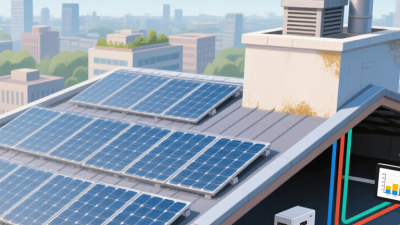
Compare monthly electricity use with estimated solar generation, then check peak demand, usable roof area, and shading before choosing a system size.
Illustrative home assessment: Annual electricity use is 10,800 kWh, peak demand is 6.5 kW, usable roof area is 55 m², and estimated shading is 15%. An 8 kW system could produce about 9,180 kWh per year after the assumed shading loss; actual output depends on location, roof orientation, weather, and system design. The annual energy estimate is below the example home’s use, so compare system options and local production estimates before deciding.
Estimate System Size with NREL PVWatts: 1 kW May Yield 1,000–1,500 kWh/Year
Choosing the right solar system begins with annual energy use, not roof size alone. Check twelve months of utility bills and note seasonal peaks. NREL’s PVWatts Calculator estimates output using location, system capacity, tilt, and orientation. Its results are estimates, not guarantees; shade, snow, and inverter losses can change real production.
A practical planning range is 1,000–1,500 kWh per year for each installed kilowatt, depending on local sunlight and system conditions. That puts a 6 kW system near 6,000–9,000 kWh annually. For context, the U.S. Energy Information Administration reported average residential electricity use of about 10,791 kWh per customer in 2022. A household in a sunny region may need less capacity than one under frequent cloud cover. And estimates can be wrong. Compare PVWatts results with your bills, then ask a qualified installer to assess roof shade and usable area. NREL’s PVWatts documentation describes the tool’s inputs and limitations.
Tips: Enter your exact location and roof direction in PVWatts. Test a lower-output scenario, too. A little caution helps; actual production may not match the tidy estimate.
How to Choose the Right Solar Panel System? - Estimate System Size with NREL PVWatts: 1 kW May Yield 1,000–1,500 kWh/Year
Illustrative annual energy estimates by installed DC system capacity
| System Size (kW DC) |
Estimated Annual Production (kWh) |
Average Monthly Production (kWh) |
Average Daily Production (kWh) |
Share of 10,800 kWh/Year Benchmark |
| 1 kW |
1,000–1,500 |
83–125 |
2.7–4.1 |
9.3%–13.9% |
| 3 kW |
3,000–4,500 |
250–375 |
8.2–12.3 |
27.8%–41.7% |
| 5 kW |
5,000–7,500 |
417–625 |
13.7–20.5 |
46.3%–69.4% |
| 7 kW |
7,000–10,500 |
583–875 |
19.2–28.8 |
64.8%–97.2% |
| 10 kW |
10,000–15,000 |
833–1,250 |
27.4–41.1 |
92.6%–138.9% |
How to use these estimates: The ranges apply the stated planning yield of 1,000–1,500 kWh per installed kW per year; monthly and daily figures are annual averages, not a prediction for every season. The comparison column uses an illustrative electricity consumption benchmark of 10,800 kWh per year. Actual production varies with location, roof orientation and tilt, shading, weather, and system losses. Use a location-specific PVWatts estimate and compare it with your own annual electricity use before choosing a system size. Production exceeding annual use does not necessarily mean your bills will be zero.
Compare Panel Ratings: Commercial Modules Commonly Exceed 20% Efficiency
Commercial solar modules commonly exceed 20% efficiency, but that figure needs context. It shows how much sunlight a panel converts into electricity under standardized test conditions. It does not predict a system’s full-day output. That distinction matters.
A 22% module may generate more power from a limited roof area than a similarly sized 19% module. Yet shade from a vent, dust, high temperatures, and roof orientation can lower actual production. Check rated wattage, panel dimensions, temperature coefficient, and performance warranty alongside efficiency. Small details count. Compare ratings measured under the same test standard; otherwise, the figures may not be directly comparable. Ask for a site-specific estimate based on local weather and shading, not just a best-case brochure figure. An open roof can still have awkward afternoon shade.
Efficiency alone is not a purchase decision. Consider roof space, installation costs, inverter compatibility, and expected energy use. Higher-efficiency panels may cost more, and that premium may not pay off on a spacious, unshaded roof. Easy to overlook. Request the assumptions behind each production estimate, including system losses and degradation, then compare proposals on equal terms.
Match Inverters and Batteries: 96–99% Inverter and 85–95% Battery Efficiency
How to Choose the Right Solar Panel System?
Match the inverter and battery to how your home uses electricity. A modern inverter may convert 96–99% of incoming DC power into usable AC power under specified conditions. That figure can change with load, temperature, and system design. A unit running far below its ideal capacity may perform differently than its headline rating suggests. Check the efficiency curve, not only the highest number.
Battery efficiency usually means round-trip efficiency: how much stored energy you can use later. An 85–95% rating means some energy is lost during charging and discharge. For example, a battery receiving 10 kilowatt-hours may return roughly 8.5 to 9.5, depending on conditions. Compare usable capacity, power output, and compatible voltage alongside efficiency. A neat specification sheet can be reassuring, but it cannot predict every household’s actual usage.
Tips: Compare ratings measured under similar conditions. Ask how the inverter performs at your typical daytime output, and check battery efficiency at realistic charge rates. Leave some room for future needs, but avoid buying capacity you rarely use. Small details matter. I’d also revisit the assumptions after reviewing recent electricity bills; estimates can be imperfect.
Check Degradation, Warranties, and Costs Over a 25-Year System Life
A solar panel’s first-year output is only part of the story. Ask for its expected annual degradation rate and estimated production in year 25. At 0.5% yearly degradation, a panel may retain about 88% of its original output after 25 years. Small differences matter. Request the calculation behind any production estimate, including your roof direction, shading, and local weather. A sunny sales illustration is not your roof.
Read product and performance warranties separately. One may cover defects; another may promise a minimum power output after a set period. Check what happens if a panel falls below that level, and whether labor, shipping, and removal are included. The fine print matters. A replacement panel is less reassuring if you must pay to access and reinstall it. Warranty length alone does not reveal how practical a claim will be.
Compare total costs across the full system life, not just the installation quote. Include financing charges, inverter replacement, monitoring fees, and likely maintenance. Ask whether roof repairs could require temporary panel removal. Then compare estimated lifetime costs with projected electricity production, using the same assumptions for every quote. Forecasts are not guarantees; I’d treat unusually precise 25-year savings as a reason to ask more questions. Keep the written estimates, warranty terms, and production assumptions together for later reference.