How to Choose the Best Solar PV Panels?
Choosing the best Solar Pv Panels starts with your roof, energy use, and local weather—not a single efficiency number. A panel that performs well in a laboratory may not suit a shaded roof or a limited budget. Small details matter. For example, compare the panel dimensions with the clear roof space around vents and chimneys. That matters.
“Solar is the new king of electricity markets,” said Fatih Birol, Executive Director of the International Energy Agency. His observation reflects solar power’s growing role, but choosing equipment still requires careful comparison. Review a panel’s rated power, efficiency, temperature coefficient, product warranty, and performance warranty. Check whether the warranty terms are clear and supported by the manufacturer. Ask an installer how nearby shade, roof direction, and seasonal temperatures could affect expected output. A high-efficiency model is not automatically the best value. Not always.
This guide will help you assess those trade-offs without treating a sales brochure as independent proof. It will explain how to compare specifications, evaluate durability, and weigh price against expected performance. Look for test results and product records from credible sources, and confirm that estimates use your actual site conditions. Be cautious with guaranteed savings claims; household use and future electricity prices can change. No shortlist is perfect. A sensible choice balances dependable evidence with the realities of your roof, your budget, and the sunlight your home actually receives.
Identify Your Energy Needs and Available Installation Space
Choosing solar panels starts with your electricity use, not the highest wattage on a product sheet. The U.S. Energy Information Administration reported average residential electricity consumption of 10,791 kWh per household in 2022. Treat that as context, not a target: your bills, heating system, and future plans matter more. Gather twelve months of bills and note seasonal peaks. Small details count.
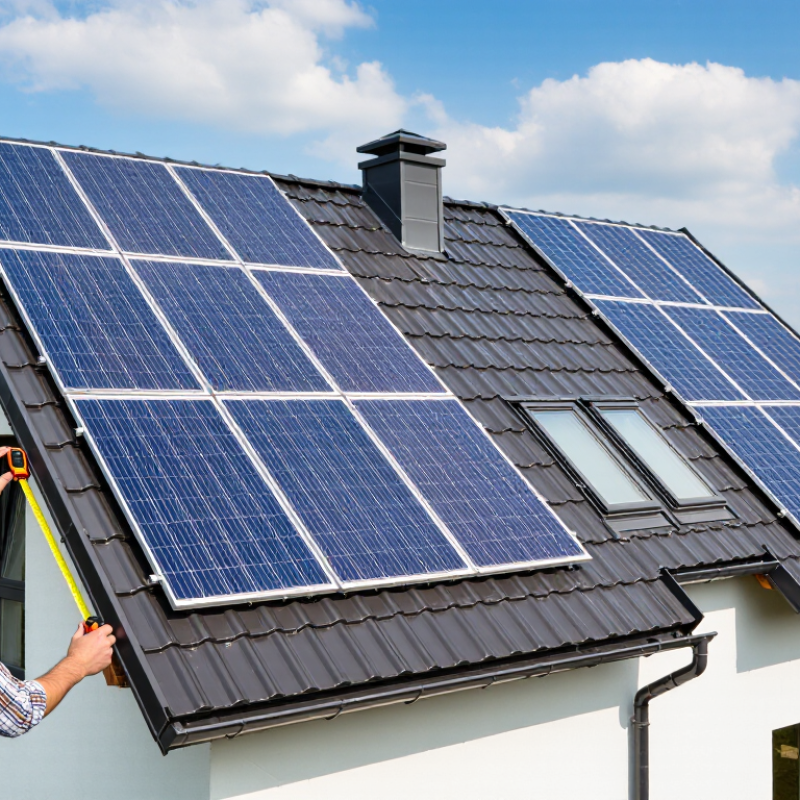
Next, measure usable roof area, excluding vents, chimneys, shaded sections, and access paths. Check panel dimensions and rated output on each manufacturer’s specification sheet, then estimate how many panels can fit. The National Renewable Energy Laboratory’s PVWatts tool estimates solar production using location, roof orientation, tilt, and system losses. Run it for your actual address and compare its annual estimate with your usage. A neat roof sketch helps. It can also reveal awkward gaps that a simple square-foot estimate misses.
Tips: Photograph roof shade in the morning and afternoon. Ask an installer to explain assumptions about shading and losses, and request an alternative layout if the estimate seems too optimistic. Estimates are imperfect; real output varies with weather and site conditions.
Compare the Main Types of Solar PV Panels
Monocrystalline, polycrystalline, and thin-film panels suit different roofs and priorities. Monocrystalline panels generally deliver the most power per square metre. Fraunhofer ISE’s 2024 Photovoltaics Report places leading commercial crystalline-silicon modules in roughly the 22–24% efficiency range. That can matter on a small roof, where every panel area counts. Polycrystalline panels usually offer lower efficiency, so they may need more space for the same output. Thin-film panels are often lighter and can perform well in diffuse light, but product efficiency varies by technology and module. There is no universal winner.
Check the usable roof area, shading, local climate, and mounting limits before comparing prices. A narrow roof section shaded by a chimney may change the value of a high-efficiency panel. NREL’s PVWatts calculator can estimate expected production using a site’s location and system details; treat the result as an estimate, not a guarantee. Also compare product warranties and degradation terms. Efficiency alone does not tell you how much energy a system will produce over its lifetime.
Tips: Ask installers to model the same roof layout with each panel type. Compare annual kilowatt-hours, not just panel efficiency or purchase price. Check for shade at different times of day. Small details matter. And estimates can be wrong if roof measurements or shade assumptions are off.
How to Choose the Best Solar PV Panels? - Compare the Main Types of Solar PV Panels
Efficiency figures are typical ranges for commercial modules; actual performance varies by product, design, and operating conditions.
| Panel type |
Typical module efficiency |
Typical temperature coefficient |
Main advantages |
Main trade-offs |
Often suited to |
| Monocrystalline silicon |
About 19–23% |
About −0.30% to −0.40% per °C |
High power output per unit of area; widely available; suitable for space-limited roofs. |
Can cost more than lower-efficiency options; output still falls as cell temperature rises. |
Homes and businesses with limited roof area or a need for high output per panel. |
| Polycrystalline silicon |
About 15–18% |
About −0.35% to −0.45% per °C |
Established crystalline-silicon technology; can be a practical option where panel area is plentiful. |
Lower efficiency than most current monocrystalline modules; less common in new installations. |
Projects where available area and upfront cost matter more than maximizing output per square metre. |
| Cadmium telluride (CdTe) thin-film |
About 17–20% |
Often about −0.25% to −0.32% per °C |
Can perform comparatively well at high temperatures; commonly used in large-scale solar projects. |
Fewer product choices in some markets; cadmium handling and end-of-life recycling require appropriate controls. |
Utility-scale installations and sites where its temperature performance and project economics fit. |
| Copper indium gallium selenide (CIGS) thin-film |
About 13–19% |
Varies by product; often around −0.30% to −0.40% per °C |
Thin-film construction can support lightweight or flexible product designs; some products suit integration into building surfaces. |
Efficiency and availability vary considerably; flexible formats may have different mounting and service requirements. |
Specialty roofs, curved surfaces, or applications where a particular lightweight format is needed. |
| Amorphous silicon (a-Si) thin-film |
About 6–10% |
Varies by product; generally less temperature-sensitive than many crystalline-silicon modules |
Can be made lightweight and used in some low-power or flexible applications. |
Low efficiency means considerably more area is needed for the same rated capacity; less common for mainstream rooftop systems. |
Small devices, specialty products, or installations where low weight matters more than compact size. |
When comparing panels, check the rated output, dimensions, temperature coefficient, product and performance warranties, certifications, and suitability for your roof and local climate. Efficiency alone does not determine the best choice.
Evaluate Efficiency, Power Output, and Performance Ratings
How to Choose the Best Solar PV Panels?
Panel efficiency shows how much sunlight a module converts into electricity. A higher percentage can matter on a small roof, where every square metre counts. But efficiency alone does not predict your monthly bill. Compare panels with similar rated power, measured under the same standard test conditions. Then check the physical dimensions; a powerful panel may not fit neatly around vents or roof edges.
Look beyond the headline wattage. Temperature coefficient indicates how much output may fall as the panel heats up on a sunny roof. Lower degradation rates can help preserve production over time, while low-light performance may matter in cloudy regions. Read the test conditions carefully. Ratings are useful, but they are not a promise of daily output. Shade from a chimney, dust on glass, roof direction, and inverter limits can all change real-world results. Small details matter.
A practical comparison uses estimated annual energy, not just peak power. Ask for assumptions about local weather, roof tilt, shading, and system losses. If possible, compare projected output per usable roof area. A spreadsheet can help. Yet projections still involve uncertainty, and overly precise figures deserve a second look. It is easy to focus on the best number and miss the assumptions behind it. Check the performance documentation and warranty terms, then compare the figures with your site conditions.
Check Panel Durability, Certifications, and Warranty Terms
When comparing solar PV panels, inspect the certification documents, not just the logo on a product sheet. IEC 61215 covers design qualification and performance testing, while IEC 61730 addresses electrical and fire safety. These tests help screen for common risks, but they do not guarantee that a panel will suit every roof or climate. Check that the certificate matches the exact model and comes from a qualified testing body. Small print matters. Look for test conditions relevant to your site, including high temperatures, humidity, and mechanical loading from wind or snow.
Warranty terms deserve the same close reading. A product warranty generally covers defects; a performance warranty sets an expected power output over time. Check the annual degradation allowance, the output threshold that triggers a claim, and who pays for labor, removal, and shipping. The NREL report “Photovoltaic Degradation Rates—An Analytical Review” found a median degradation rate of about 0.5% per year across nearly 2,000 reported rates. That is a useful benchmark, not a promise for an individual installation. Not just years. A long warranty can still be difficult to use if its claim process or remedies are vague. Read the exclusions carefully, and keep the certificate and warranty documents with your installation records.
Compare Costs and Match Panels to Your Installation Conditions
Choosing solar PV panels starts with your roof, not the highest efficiency number. A chimney’s afternoon shadow can matter more than a small efficiency gain. Check roof direction, pitch, usable area, and shade throughout the year. Ask a qualified installer to assess the structure and local weather, including wind, snow, and heat. Panels can behave differently in high temperatures, so compare temperature coefficients as well as rated output. Space matters.
Tips: Request itemized quotes for panels, the inverter, mounting hardware, wiring, and labor. Compare estimated annual energy production, not panel price alone. Confirm the system suits your inverter and roof dimensions. Review product and performance warranties, and read their exclusions carefully. A lower quote may leave out electrical upgrades. That detail is easy to miss.
Match panel dimensions and mounting needs to the roof’s available space and condition. If the roof needs repairs soon, include that cost before comparing offers. I’ve seen buyers focus too much on efficiency and overlook installation constraints; it is an easy mistake to make. Still, estimates are not guarantees. Ask how shading, orientation, and seasonal weather affect the production forecast, and keep a copy of the assumptions behind each quote.