




How to Choose Reliable Solar Panel Suppliers?
Choosing reliable Solar Panel Suppliers is a practical decision, not merely a search for the lowest quotation. A supplier may display impressive modules, polished brochures, and attractive discounts. Those details can still hide weak warranties, unstable production, or unclear component origins. The real test begins with evidence.
Jigar Shah, a clean-energy finance expert, once said, “Solar is not a technology problem; it’s a deployment problem.” His observation also applies to procurement. A dependable supplier must support successful deployment after the purchase. Check manufacturing records, product certifications, independent test reports, and warranty terms. Ask whether the warranty comes directly from the manufacturer or through a local distributor. That difference matters when a panel fails after ten years.
Request recent project references, not only old success stories. Contact those customers and ask about delivery delays, replacement claims, and technical support. Examine the panel’s degradation rate, temperature coefficient, serial-number traceability, and expected operating conditions. Factory audits can reveal storage problems that brochures never mention.
There is no perfect supplier.
Even strong companies can experience shortages or communication failures. I have seen procurement teams focus heavily on price and overlook packaging quality. Damaged panels arrived before installation began. A more reliable process compares total ownership cost, documentation quality, service capacity, and financial stability. Independent engineers should review technical claims when project risks are significant. Trust should be earned through verifiable records, clear answers, and consistent performance—not confident promises.

Defining Your Solar Panel Supplier Requirements
Defining your requirements is the real starting point when choosing a reliable solar panel supplier. Global solar additions reached about 420 GW in 2023, according to the International Energy Agency’s Renewables 2024 report. This scale creates more choices, but not every supplier offers equal evidence. Record your project size, roof conditions, target output, operating temperature, delivery schedule, and budget. Write down acceptable power tolerance and degradation rates. Do not rely on vague phrases such as “premium quality.”
Your technical checklist should include independent testing, traceable materials, and clear warranty terms. The IEC 61215 and IEC 61730 standards address module design reliability and safety. Ask for current certificates, laboratory details, and serial-number traceability. Also request factory inspection records and sample test results. The IEA PVPS Trends 2024 report recorded approximately 456 GW of new photovoltaic capacity worldwide in 2023. A supplier serving this fast-growing market should still explain quality controls clearly. Volume alone proves little.
Review temperature coefficients, mechanical-load ratings, fire classification, and expected annual degradation. NREL research commonly reports crystalline-silicon module degradation near 0.5% yearly, though actual results vary by climate and construction. Compare claims against measured evidence. A spreadsheet can still lie. Ask how failed modules are replaced, who pays freight, and how claims are documented. I would rather accept a slightly higher price than an unclear remedy. Yet this requirement is not perfectly tidy; local installation skills, shipping damage, and weather exposure can change the final result.
How to Choose Reliable Solar Panel Suppliers? - Defining Your Solar Panel Supplier Requirements
| Evaluation Dimension | Supplier Requirement | Recommended Benchmark or Evidence | How to Verify | Warning Signs |
|---|---|---|---|---|
| Product Technology | Clearly specified module design, cell type, power class, dimensions, and electrical characteristics. | The technical datasheet should state maximum power, efficiency, voltage, current, temperature coefficients, and operating conditions. | Compare the datasheet with the quotation, product label, installation design, and independent test documents. | Missing electrical parameters, inconsistent specifications, or frequent changes to the proposed model. |
| Independent Certification | Products should be tested against applicable photovoltaic safety and performance standards. | Look for relevant certifications such as IEC 61215 for design qualification and IEC 61730 for module safety, where applicable. | Request current certificates, verify the exact model number, and confirm that the certificate issuer is an accredited testing organization. | Certificates are expired, apply to a different model, or cannot be independently verified. |
| Power Output Tolerance | The supplier should define how the actual measured output compares with the nameplate rating. | A clearly stated positive or non-negative power tolerance is preferable because it reduces the risk of receiving modules below the rated output. | Review the product datasheet, sample flash-test reports, and the contractual delivery specification. | The tolerance is omitted, described ambiguously, or differs between the quotation and the contract. |
| Performance Warranty | A long-term performance commitment with transparent degradation terms. | Many crystalline-silicon modules provide a 25-year or longer linear performance warranty; the exact guaranteed output should be stated in writing. | Read the warranty document for degradation rates, claim procedures, exclusions, and the responsible legal entity. | Only a general marketing statement is provided, with no degradation schedule or enforceable claim process. |
| Product Warranty | Coverage for defects in materials and workmanship, including a practical remedy process. | The warranty period should be compared with the project life, local consumer and commercial laws, and the supplier's financial ability to support claims. | Confirm coverage for junction boxes, connectors, frames, glass, and labor or transport responsibilities. | Warranty claims must be handled only in a distant jurisdiction, or the supplier excludes common component failures. |
| Manufacturing Quality Control | Documented controls for incoming materials, cell inspection, lamination, electroluminescence testing, insulation, and final inspection. | A reliable supplier should be able to provide a quality-control plan, batch traceability, and inspection records without revealing confidential customer information. | Request factory-audit access or an independent pre-shipment inspection with agreed sampling criteria. | No batch identification, no inspection records, or reluctance to permit reasonable third-party quality checks. |
| Reliability Testing | Evidence that the module design has been evaluated for common environmental stresses. | Review applicable tests for damp heat, thermal cycling, humidity-freeze, mechanical load, hail, and potential-induced degradation. | Ask for test reports linked to the exact module construction, materials, and model family being purchased. | The supplier presents generic laboratory claims that do not identify the tested product configuration. |
| Environmental Suitability | Modules must match the project's temperature, wind, snow, humidity, salt-mist, and corrosive conditions. | The allowable operating range and mechanical-load ratings should be compatible with the installation location and mounting system. | Compare the datasheet with the site's climate data, structural calculations, and corrosion-risk assessment. | The supplier recommends a standard product without reviewing site conditions or mounting constraints. |
| Supply Capacity | Ability to deliver the required quantity within the project schedule and maintain consistent specifications. | A written production schedule should include monthly capacity, lead time, shipment milestones, packaging details, and contingency planning. | Review production allocation, inventory evidence, shipping records, and the supplier's history of on-time delivery. | The supplier cannot reserve production capacity or repeatedly changes delivery dates after receiving payment. |
| Traceability | Every shipment and module batch should be traceable to production records and test results. | Serial numbers, lot numbers, manufacturing dates, and flash-test data should be recorded and linked to shipping documents. | Select random module serial numbers and confirm that the supplier can retrieve corresponding production and inspection records. | Serial numbers are duplicated, unreadable, absent, or not connected to test documentation. |
| Total Cost of Ownership | Evaluation should include logistics, taxes, installation compatibility, maintenance, replacement risk, and warranty support—not only purchase price. | Compare the expected energy yield and lifecycle cost using the same assumptions for power, efficiency, degradation, shipping, and installation. | Request a fully itemized quotation and calculate cost per watt together with estimated lifetime energy production. | The lowest price is offered without clear freight terms, quality controls, warranty costs, or delivery conditions. |
| Payment and Contract Terms | Commercial terms should protect both parties and define measurable acceptance conditions. | The contract should specify product model, quantity, tolerances, inspection rights, delivery terms, payment milestones, and remedies for nonconformity. | Have the contract reviewed by a qualified legal or procurement professional before making a substantial payment. | Full payment is requested before production, while quality, delivery, and rejection terms remain undefined. |
| After-Sales Support | Accessible technical support, spare-part coordination, claim handling, and documentation in the project region. | The supplier should provide a named service contact, response-time commitment, installation guidance, and a documented warranty-claim workflow. | Test the support channel before purchase and request examples of anonymized claim-resolution timelines. | Support is limited to sales personnel, response times are undefined, or technical documents are unavailable. |
| Supplier Stability | A legally identifiable business with sufficient operational and financial capacity to support a long-term project. | The supplier should provide legal registration details, audited or credible financial information, references, and a history of completed deliveries. | Conduct legal-entity checks, trade references, credit screening, and site or warehouse verification where appropriate. | The contracting entity is unclear, bank details change unexpectedly, or references cannot be independently confirmed. |
Procurement principle: Compare suppliers using the same technical specification, inspection scope, delivery terms, warranty assumptions, and total-cost model. Certifications and warranty statements should always be verified for the exact product model and contracting entity.
Related Posts
-

Unlocking Sustainable Energy Solutions by Choosing the Best Solar Panel Suppliers for Global Procurement
-
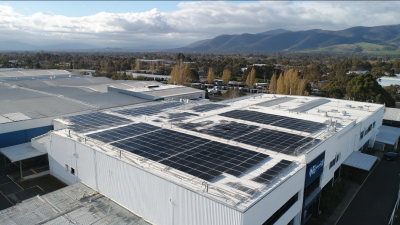
Ultimate Guide to Choosing the Right Commercial Solar Panel for Your Business
-

Maximize Your Home Energy Efficiency with Cutting Edge Solar Panels
-

Why Home Solar Systems Are Essential for Reducing Energy Bills and Protecting the Environment
-

The Future of Sustainable Living with Solar Energy Solutions
-

Exploring Best Solar Installation Cost Trends for 2025 and How to Optimize Your Investments