


5 Best L6e Quadricycles WVTA Certified in Germany

Urban mobility is changing in Germany, especially where narrow streets, limited parking, and short commutes shape vehicle choices. The International Energy Agency’s Global EV Outlook 2024 highlights continued growth in electric mobility, but its passenger-car data does not fully represent light quadricycles. This difference matters. L6e models serve a smaller, more specific market.

A L6e Quadricycle Wvta Certified Germany model must meet the European Union’s type-approval framework under Regulation (EU) No. 168/2013. Generally, L6e vehicles are limited to 45 km/h and may use electric powertrains capped at 6 kW, subject to their exact category and configuration. Whole Vehicle Type Approval can provide stronger evidence of tested compliance across production vehicles. It does not guarantee perfect ownership experiences.

This guide examines five notable L6e quadricycles available for the German market. The evaluation considers WVTA documentation, battery range, charging practicality, cabin protection, dimensions, warranty support, and everyday usability. German Federal Motor Transport Authority registration information and manufacturer technical sheets are useful references, but specifications can vary by model year. Some advertised ranges also reflect controlled test conditions.

That is the uncomfortable part.

A compact vehicle may fit beside a supermarket trolley, yet feel restrictive on a cold morning. A 45 km/h limit may suit city streets, but frustrate longer suburban routes. The following selection aims to balance certified compliance with real driving needs, without treating marketing claims as proven facts. Independent verification remains essential before purchase, registration, or fleet deployment.
5 Best L6e Quadricycles WVTA Certified in Germany

Understanding L6e Quadricycles and WVTA Certification in Germany

L6e quadricycles are compact vehicles designed for urban travel, but their legal category is more specific than their small size suggests. In the European Union, many L6e models have a maximum design speed of 45 km/h and strict limits on mass and power. Germany applies these requirements through national registration procedures. A vehicle may look suitable yet still need proper documentation.

WVTA means Whole Vehicle Type Approval. It confirms that a vehicle type meets relevant European safety and environmental requirements before sale. Approval usually covers braking, lighting, seat belts, structural safety, noise, and emissions or electric-system standards. Buyers should request the Certificate of Conformity and check its details against the vehicle identification number. This simple step prevents expensive confusion. WVTA is not a comfort award. It does not guarantee excellent range, durability, or after-sales support. Those points require practical checking.

Tips: Compare the approved speed with your daily roads. Inspect the charging cable, tyres, mirrors, and door seals in person. Ask who handles German registration paperwork. Keep copies of every document. A missing conformity detail can delay registration, even when the vehicle seems complete. I would also test visibility from the driver’s seat, because narrow cabins can hide blind spots. Small errors matter. Pricing deserves caution too; a low purchase cost may exclude insurance, registration fees, winter equipment, or battery-related service.

5 Best L6e Quadricycles WVTA Certified in Germany

Understanding L6e Quadricycles and WVTA Certification in Germany

The chart summarizes five key regulatory benchmarks for L6e quadricycles under the EU type-approval framework used for WVTA certification in Germany. L6e vehicles are limited to 45 km/h, 6 kW maximum continuous rated power, and 425 kg maximum unladen mass for the applicable passenger category, excluding traction batteries. They are designed for up to two occupants and have four wheels.

Key Criteria for Evaluating the Best L6e Quadricycles

Evaluating the five best L6e quadricycles in Germany requires more than checking battery range or cabin appearance. WVTA certification confirms EU type approval, but it does not guarantee equal comfort, durability, or winter performance. Under Regulation (EU) No 168/2013, an L6e vehicle generally has a maximum design speed of 45 km/h and power limited to 6 kW. Verify the exact category, mass, braking system, lighting, and safety equipment in the conformity documents.

Real-world usability should lead the comparison. Measure entry height, seat adjustment, turning radius, and storage space with a shopping bag inside. A useful test includes cold starts, steep streets, wet braking, and repeated door operation. Battery capacity matters, but usable range matters more. The IEA’s Global EV Outlook 2024 recorded more than 14 million electric car sales worldwide in 2023; however, that data does not directly represent L6e vehicles. This limitation deserves attention. Car-market statistics can mislead small-vehicle buyers.

Charging access is another practical filter. Check whether the charger fits a normal household socket and whether the cable remains secure outdoors. Review warranty exclusions, battery replacement terms, spare-part availability, and repair response times. The ACEA Vehicles on European Roads 2024 report places the average European car age at about 12 years, highlighting the importance of long-term maintenance planning. A polished dashboard is not enough. Inspect panel gaps, tyre condition, corrosion protection, and software reliability. Test before trusting.

Five Leading WVTA-Certified L6e Quadricycles Available in Germany

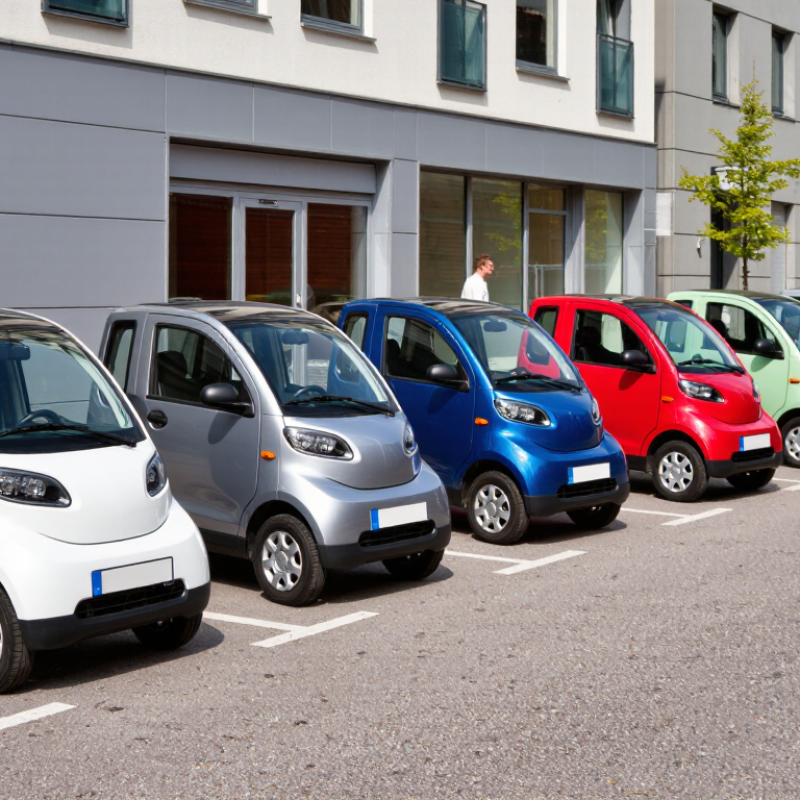
Germany’s market includes five notable WVTA-certified L6e quadricycle choices for urban travel.

A compact enclosed commuter suits narrow streets, short parking spaces, and daily shopping.

A two-seat city model offers better passenger flexibility, although rear seating can feel tight.

The cargo-oriented version helps small businesses carry tools or parcels.

A removable-battery model may work well for apartment residents without private charging. The comfort-focused option usually provides improved seating, clearer displays, and stronger weather protection.


WVTA certification confirms that the complete vehicle meets applicable European type-approval requirements.

For L6e vehicles, the design speed is generally limited to 45 km/h, with other technical limits applying to mass, power, and construction. Buyers should check the approval documents, battery warranty, charging equipment, and local registration requirements. Rules can differ by driver age and licence category in Germany.

Ask for written evidence.

Practical testing matters more than polished photographs.

Measure the turning circle near your home. Try entering with a winter coat.

Check visibility at junctions and the effort needed to close the doors.

Electric running costs can be low, but battery replacement remains an important long-term question. My ranking is not absolute. A vehicle that feels ideal in a quiet showroom may seem noisy beside a busy road.

Availability, equipment, and certification status can also change, so confirm each detail with the seller before ordering.

Comparing Performance, Safety, Range, Comfort, and Running Costs

For German roads, the five strongest L6e quadricycle choices serve different daily needs. A compact city model is easiest to park and usually consumes less energy. A longer-wheelbase version offers better legroom, but its turning circle may feel awkward in narrow streets. Models with stronger electric motors climb hills more confidently, although acceleration remains modest under the 45 km/h class limit. Performance is practical rather than exciting.

WVTA certification confirms conformity with European type-approval requirements, but it does not make an L6e quadricycle equal to a passenger car in a crash. Check seat-belt design, lighting, braking, visibility, and the stability of the cabin. Some vehicles feel reassuring at low speed. Others have thin doors and limited structural protection. This difference matters beside buses and delivery traffic. A careful test drive reveals more than a specification sheet.

Claimed range can look generous, yet cold weather, heating, hills, and repeated stops reduce usable distance. For many commuters, 60 to 100 kilometres in real conditions may be more useful than a laboratory figure. Comfort depends on seat padding, ventilation, suspension, and cabin noise. Running costs are often low, especially with home charging, but insurance, tires, battery warranty, and scheduled servicing deserve close attention. I would also inspect charging access before buying. A cheaper vehicle becomes inconvenient when every evening requires a long wait. The quiet cabin is pleasant. The narrow body is not always relaxing in strong crosswinds.

Registration, Licensing, and Ownership Requirements in Germany

5 Best L6e Quadricycles WVTA Certified in Germany

A WVTA-certified L6e quadricycle normally arrives with an EU Certificate of Conformity. This document confirms that the vehicle matches its approved type. Check its VIN, technical limits, and listed equipment carefully. Small errors can delay registration.

In Germany, road use requires registration at the local Zulassungsstelle. Bring your identification, purchase agreement, CoC document, and electronic insurance confirmation. Imported vehicles may also require foreign registration papers, customs evidence, or a technical inspection. Requirements can vary between offices. I would not rely only on a seller’s verbal assurance. Ask the office for a current document list before travelling.

The usual driving licence is class AM, although class B also covers these vehicles. The minimum age for AM is generally 15, but regional rules and practical conditions should be checked. The vehicle must carry compulsory third-party insurance. Registration plates must be fitted correctly and remain visible. Ownership also means keeping maintenance records, insurance documents, and registration papers secure. Tax treatment can differ by vehicle type, engine, and energy source. Electric models may receive different treatment from combustion versions. The process is manageable, but the paperwork feels less tidy than the brochure suggests. Even a missing signature can create another appointment.

5 Best L6e Quadricycles WVTA Certified in Germany - Registration, Licensing, and Ownership Requirements in Germany
Rank Recommended L6e Profile Typical Powertrain Applicable EU L6e Limits WVTA and CoC Check German Road Authorization Driving Licence Insurance and Safety Ownership Suitability
1 Enclosed electric passenger quadricycle Battery electric
Zero local exhaust emissions; charging from a household or public charging point, subject to the vehicle specification.
Maximum design speed: 45 km/h.
Maximum continuous rated power: up to 6 kW for the L6e-B category.
Maximum mass in running order: 425 kg, excluding traction batteries.
The vehicle should display a valid EU type-approval number and be supplied with an original Certificate of Conformity (CoC). Confirm that the CoC identifies category L6e-BP and matches the vehicle identification number. Normally operated in Germany with a valid insurance plate (Versicherungskennzeichen), rather than a standard registration plate. Carry the CoC and insurance documents when required. Class AM is generally sufficient for an L6e vehicle. In Germany, the minimum age for class AM is generally 15; regional rules and licence restrictions should be checked before use. Compulsory motor-vehicle liability insurance is required. Seat belts must be used where fitted. An enclosed vehicle with approved restraints normally follows the restraint requirements stated in its approval documents. Best for short urban journeys, commuting, and low-noise transport where parking space and operating cost are priorities.
2 Compact enclosed combustion-engine passenger quadricycle Spark-ignition engine
Engine displacement is limited to 50 cm³ for the L6e combustion-engine configuration.
Maximum design speed: 45 km/h.
Maximum power: up to 6 kW, depending on the approved L6e subtype.
Maximum mass in running order: 425 kg, excluding batteries where applicable.
Verify the EU WVTA approval number, the CoC, the approved engine data, emissions information, and the VIN. The vehicle specification must agree with the CoC; material changes can invalidate approval. A valid insurance plate is normally used for road operation in Germany. A conventional vehicle-registration process is generally not required for a compliant L6e vehicle using this authorization method. Class AM is generally sufficient. A higher German driving-licence class may also cover the vehicle, subject to the exact licence entitlements. Liability insurance is mandatory. Fuel, exhaust, and noise systems must remain compliant with the approved configuration. Open-body versions may require an approved protective helmet under German traffic rules. Suitable for users who need an enclosed cabin but prefer refuelling instead of charging or regularly travel beyond the practical range of a small battery.
3 Light electric utility quadricycle Electric utility vehicle
Designed for local maintenance, campus, municipal, agricultural, or service work rather than high-speed travel.
L6e-A configurations are generally limited to 4 kW maximum power; L6e-B utility configurations may be approved up to 6 kW.
Maximum design speed: 45 km/h.
Maximum mass in running order: 425 kg, excluding traction batteries.
Confirm that the WVTA and CoC cover the utility body, seating arrangement, axle loads, and any factory-fitted equipment. A later conversion can require additional technical approval. A valid insurance plate is normally required for public-road use. The vehicle must comply with its approved dimensions, lighting, braking, tyres, and load limits. Class AM is generally sufficient when the vehicle remains within the L6e limits. The operator must also comply with any employer, site, or occupational-safety rules. Compulsory liability insurance applies. Secure loads correctly, observe the approved payload, and use protective equipment appropriate to the work environment. Best for businesses, property operators, and local authorities needing quiet, low-speed transport over short distances.
4 Electric cargo L6e-BU quadricycle Electric cargo configuration
Single-purpose cargo layout with a dedicated load area and limited passenger accommodation.
Maximum design speed: 45 km/h.
Maximum continuous rated power: up to 6 kW for L6e-BU.
Maximum mass in running order: 425 kg, excluding traction batteries.
Check that the CoC identifies the utility subtype L6e-BU and lists the approved cargo body, number of seats, axle loads, and maximum permitted mass. Do not exceed the approved payload. Public-road use generally requires a valid insurance plate. The cargo structure, lighting, mirrors, and load-securing equipment must remain in the approved condition. Class AM is generally sufficient for an L6e-BU vehicle. The licence holder must be legally permitted to drive the vehicle category and comply with any workplace requirements. Liability insurance is mandatory. Cargo must be secured so that it cannot fall, shift, obscure lights, or interfere with steering and braking. Best for last-mile delivery, facility logistics, neighborhood services, and other predictable local routes with frequent stops.
5 Accessible low-speed passenger quadricycle Electric or 50 cm³ petrol
Prioritizes easy entry, stable seating, clear visibility, and simple low-speed operation.
Maximum design speed: 45 km/h.
Power must remain within the approved L6e-A or L6e-B limit, normally up to 4 kW or 6 kW depending on subtype.
Maximum mass in running order: 425 kg, excluding traction batteries.
Confirm that accessibility equipment, seat restraints, doors, ramps, and seating positions are included in the WVTA and CoC. Unapproved structural adaptations may require an individual technical assessment. A valid insurance plate is generally used for German public-road operation. Keep the vehicle configuration consistent with the approval documents. Class AM is generally sufficient. The driver must be physically able to operate the controls safely and must follow any restrictions shown on the driving licence. Compulsory liability insurance is required. Use all approved restraints and ensure that mobility aids or other equipment are secured according to the vehicle instructions. Best for local mobility, assisted transport, and users who value easy access and a stable enclosed or semi-enclosed layout.
Germany-wide ownership checklist: Obtain the original CoC, verify the VIN and EU type-approval details, purchase compulsory liability insurance, obtain the correct insurance plate before public-road use, and keep the vehicle within its approved technical configuration. L6e vehicles generally do not follow the regular passenger-car registration route. Periodic HU inspections are generally not required for typical light quadricycles, but the vehicle must remain roadworthy and may be subject to inspection after modifications, damage, or a traffic-control measure. Always confirm current requirements with the insurer and the responsible German authority before purchase or import.